

7 Breathable Fabrics for Coastal Weather That Actually Work
Last Updated: October 28, 2026
Quick Summary
Breathable fabrics for coastal weather conditions include linen, which breathes better than cotton because its open weave stays open even when damp, and lightweight cotton like the 4.2 oz./yd.² Airlume combed and ring-spun cotton in our tees. Choose linen for still, sticky afternoons and cotton for everything else.
- Linen dries faster than cotton after a swim and feels cooler in still, humid air.
- Favor quick-drying fabrics under about 5 oz./yd.² and avoid heavy fleece or tight knits.
- Rinse salty clothing in cool fresh water before the salt dries, then air dry in shade.
- Skip fabric softener because it coats fibers and reduces breathability.
- Salt crystals left in fabric abrade fibers and weaken seams over repeated exposure.
Table of Contents
- Why Coastal Weather Demands Breathable Fabrics
- The Best Fabrics for Hot Humid Weather by the Ocean
- Linen vs Cotton for Hot Weather: Which Breathes Better?
- Quick-Drying Beach Clothing: What to Look For
- How Salt Air and Wind Affect Fabric Over Time
- How to Wash Clothes After Salt Water
- Picking Breathable Pieces for Your Next Beach Day
- Frequently Asked Questions
Why Coastal Weather Demands Breathable Fabrics
Coastal weather is a combination of high humidity, salt-laden air, and near-constant wind, and breathable fabrics for coastal weather conditions are the difference between a comfortable day on the sand and a clammy one.
The Best Fabrics for Hot Humid Weather by the Ocean
The Ride the First Wave Tee and Vintage Script Tee listings specify 4.2 oz./yd.² Airlume combed and ring-spun cotton for solid colors and a cotton-polyester blend for ash. The Ride the First Wave Tee is $24.95, and the Vintage Script Tee is $24.95.
Linen vs Cotton for Hot Weather: Which Breathes Better?
Linen breathes better than cotton in hot weather, but cotton wins on comfort and price. Linen's flax fibers are longer and stiffer, so the weave stays open and air moves through it even when the fabric is damp. Cotton fibers swell when wet, closing the weave and slowing airflow. In practice, that means linen feels cooler in still, humid air and dries faster after a swim. The trade-offs are real: linen wrinkles the moment you sit down and feels coarser against skin until it softens with washing. Cotton feels better immediately and takes dye and print more cleanly. Our take: choose linen for still, sticky afternoons and cotton for everything else. If you're layering or moving between beach and town, cotton's versatility wins.
Here is how linen and cotton compare on the points that matter most in coastal heat.
| Factor | Linen | Cotton |
|---|---|---|
| Breathability in heat | Breathes better; open weave stays open when damp | Fibers swell when wet, closing weave and slowing airflow |
| Drying after a swim | Dries faster | Slower when wet |
| Feel against skin | Coarser until softened by washing | Feels better immediately |
| Wrinkling | Wrinkles the moment you sit down | Not noted |
| Dye and print | Not noted | Takes dye and print more cleanly |
| Best use | Still, sticky afternoons | Everything else; versatility when layering |
Quick-Drying Beach Clothing: What to Look For
Quick-drying beach clothing should be lightweight, loosely woven, and light in color, and it should never include heavy fleece or tight knits. Three things decide dry time: fabric weight, weave openness, and how much water the fiber absorbs. A thin cotton tee dries in a fraction of the time a hoodie does. Dark colors absorb heat and hold it, which slows evaporation; light colors reflect sun and dry faster. Check the label for fabric weight, usually listed in oz./yd.², and favor anything under about 5 oz. for hot days. Avoid heavy seams and double-layer panels, which trap water at the edges.
How Salt Air and Wind Affect Fabric Over Time
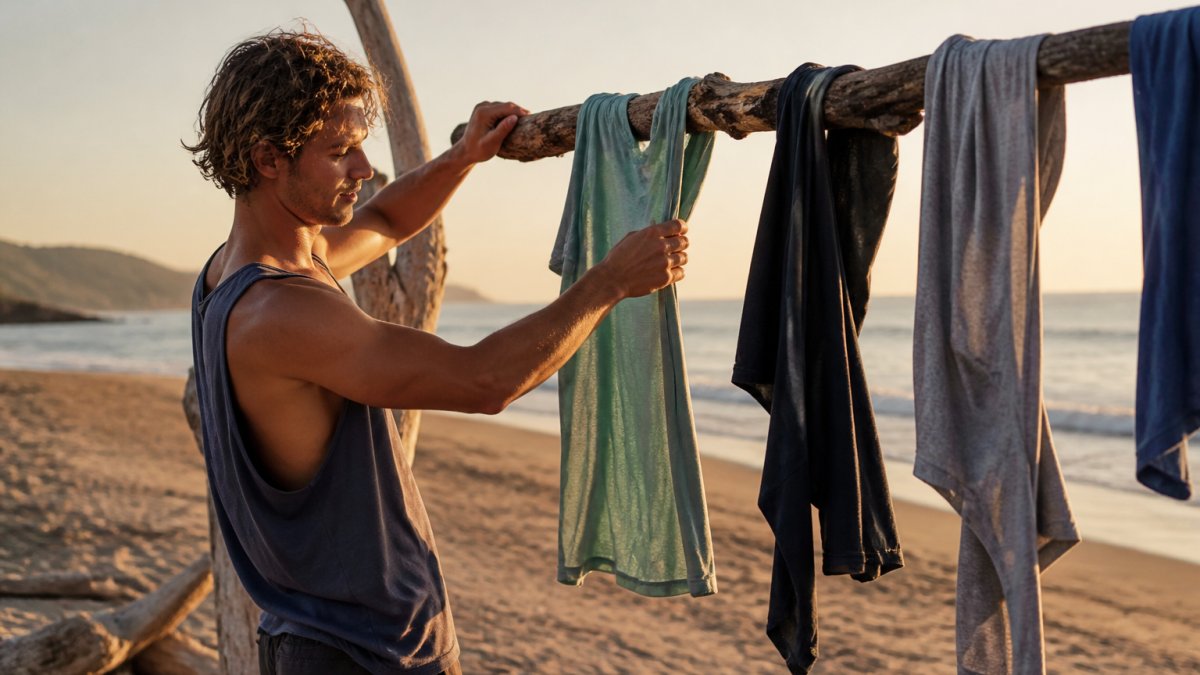
Salt crystals left in fabric after seawater dries abrade fibers and weaken seams over repeated exposure. Wind makes it worse by driving salt deeper into the weave. Cotton and linen handle salt reasonably well if rinsed, but salt residue left in place stiffens the fabric and speeds wear at stress points like hems and shoulders. Sun exposure compounds the damage: UV breaks down fibers, and salt makes the surface more vulnerable. The fix is simple and cheap: rinse after every ocean day, dry in shade rather than direct sun, and inspect seams each season. A common mistake is storing damp, salty clothing in a bag overnight. That's how a good tee becomes a rag in one summer.
How to Wash Clothes After Salt Water
- Rinse in cool fresh water before the salt dries. A quick soak in a sink or a hose-down at the outdoor shower works.
- Turn garments inside out and wash cold on a gentle cycle with mild detergent.
- Skip fabric softener. It coats fibers and reduces breathability.
- Air dry in shade. Direct sun fades prints and stresses fibers already weakened by salt.
- Check seams and hems for stiffness or fraying before you store anything.
Picking Breathable Pieces for Your Next Beach Day
Start with one breathable tank or tee. Our Beach Life Tank Top is described as made from premium, breathable fabric and has a relaxed fit for all-day comfort. If you prefer sleeves, the Ride the First Wave Tee is pre-shrunk and made from 4.2 oz./yd.² Airlume combed and ring-spun cotton in solid colors.


Frequently Asked Questions
What fabrics are best for hot, humid coastal weather?
The Ride the First Wave Tee and Vintage Script Tee listings specify 4.2 oz./yd.² Airlume combed and ring-spun cotton for solid colors and a cotton-polyester blend for ash.
Is linen or cotton more breathable in humid weather?
The Ride the First Wave Tee and Vintage Script Tee listings specify 4.2 oz./yd.² Airlume combed and ring-spun cotton for solid colors and a cotton-polyester blend for ash.
What fabric dries fastest after a day at the beach?
Thin, loosely woven fabrics dry fastest. Lightweight linen and thin cotton tank tops dry in under an hour in sun and wind, while heavier cotton tees can stay damp for hours. Quick-drying beach clothing often uses lighter fabric weights, around 4.2 oz./yd.² (142 g/m²), which is thin enough to dry fast without feeling flimsy. Hang damp pieces in open air rather than balling them up in a bag, where they stay wet and start to smell.
How do you care for clothes after exposure to salt water and sand?
Rinse salt-soaked clothing in cool fresh water as soon as you can, ideally before it dries, since salt crystals weaken fibers over repeated exposure. Turn pieces inside out, shake out sand, and wash on a gentle cycle with mild detergent. Skip fabric softener, which coats fibers and reduces breathability. Air dry instead of using high heat, which shrinks cotton and breaks down natural fibers faster. Do this consistently and breathable fabrics keep their feel season after season.
Coastal dressing rewards a little knowledge about fabric and a lot of restraint about layers. Salt and Sand Surf Shop builds breathable, coastal-inspired pieces for exactly this kind of day, from soft heathered tees to lightweight tanks, and every purchase supports the Surfrider Foundation's work protecting beaches and waves. Get started with Salt and Sand Surf Shop and build a beach-day wardrobe that breathes, dries fast, and lasts season after season.
