

Buy Sustainable Coastal Inspired Clothing: What to Look For
Last Updated: November 17, 2026
Quick Summary
Coastal inspired clothing is a loose style category, not a certified standard, so judge it by four elements: relaxed silhouettes, faded colors, breathable natural fibers, and understated beach-life details. To buy sustainable coastal inspired clothing, check fiber content, construction, supply-chain certifications, and how often you will wear the piece.
- Coastal style has no legal or industry standard, so the label is a design signal rather than a guarantee.
- Check the fiber content and care label before assuming a piece is built to last.
- No single material is automatically sustainable, so weigh each fiber's trade-offs.
- Ask which specific product a certification covers before treating it as proof for the whole line.
- Cost per wear is a better measure of value than the price tag alone.
Table of Contents
- What Coastal Inspired Clothing Actually Means
- How to Judge Sustainable Coastal Clothing
- Fabrics and Materials Compared
- Salt and Sand Pieces Compared: Price, Fit and Durability
- Sizing, Fit and Cost Per Wear
- Caring for Your Pieces So They Last
- Choosing Your First Eco Clothing Brand Piece
- Frequently Asked Questions
What Coastal Inspired Clothing Actually Means
Coastal inspired clothing is a style category, not a legal or industry standard. No regulator certifies a garment as coastal, so the label is a design signal rather than a guarantee. Most practitioners define the look through four concrete elements: relaxed silhouettes, washed or sun-faded colors, breathable natural fibers, and details borrowed from beach and boat life.
Use those four elements as a checklist when you shop. Silhouettes should be easy through the body, so the piece layers over swimwear or a tee without pulling. Colors should read as muted or faded: salt white, driftwood gray, faded navy, washed coral, sea-glass green. Fabrics should feel soft and breathable against skin. Details should be understated, a script graphic, a quarter zip, a raw or faded edge, rather than a large beach scene printed across the chest.
The term is loose on purpose, and that creates a problem for shoppers. A brand can label a plain tee "coastal" without changing a single thread of its construction. When you shop for sustainable coastal inspired clothing, separate the look from the substance by asking three questions: what the garment is made of, how it is made, and whether it fits the way you actually live.
Watch out: a beach-themed graphic does not make a garment sustainable or even coastal in construction. A heavyweight polyester tee with a palm-tree print meets none of the four elements above. Check the fiber content and care label before assuming a piece is built to last.
Coastal style also overlaps with resort wear and beachwear without being identical. Resort wear often leans dressier and more seasonal, while coastal clothing is designed to move between the beach, the boardwalk, and everyday errands in warm weather. That versatility is the practical test: if a piece only works for one vacation, it is resort wear; if you would wear it on a Saturday at home, it is coastal.
How to Judge Sustainable Coastal Clothing
Sustainability claims are easy to make and hard to verify. The most useful approach is to evaluate four things in order, fiber, construction, supply chain, and end-of-life, rather than accepting a single "eco-friendly" badge. No single material is automatically sustainable, so treat every claim as a trade-off to weigh.
Start with the fiber content on the label. Natural fibers such as cotton break down more readily than many synthetics, but conventional cotton is a water- and pesticide-intensive crop, and a blend that includes polyester will shed microfibers when washed. Organic cotton avoids synthetic pesticides, but it still requires water and land. Recycled polyester keeps plastic out of landfills but still sheds microfibers and is hard to recycle again. Neither natural nor synthetic is automatically the better choice, so read the composition and ask what trade-off you are accepting.
Next, look at construction. Fabric weight is a useful proxy for durability, so match the weight to how hard you will wear the piece. If a brand does not explain its materials or production, treat that gap as information.
Then look for supply-chain signals. Certifications are the most checkable evidence, and several are commonly referenced in the United States. A brand that lists one or more recognized certifications on a product page is giving you something to verify; a brand that uses only the word "sustainable" is not.
Finally, consider how often you will wear the piece and what happens at the end of its life. A garment you reach for every week in summer and during cool evenings is usually a better choice than a novelty item bought for a single trip. Cotton and linen can be composted or recycled through textile programs in many areas, while blended fabrics are harder to recycle and more likely to end up in landfill. Washing in cold water, air drying, and repairing small holes all extend life and reduce the footprint of any fiber.
Watch out: a brand that advertises a single certification may still use conventional fibers or opaque factories elsewhere in the supply chain. Ask which specific product the certification covers before you treat it as proof for the whole line.
Fabrics and Materials Compared
The fabric often determines how a piece feels, performs, and ages. Compare the materials side by side before buying.
| Material | Typical Strength | Typical Weakness | Best Use |
|---|---|---|---|
| 100% combed cotton | Soft, breathable, pre-shrunk versions hold shape | Dries slowly, can stretch | Tees and everyday wear |
| Cotton-polyester blend | Warm, holds color, sheds less | Retains odor, harder to recycle | Sweatshirts and hoodies |
| Heavyweight fleece blend | Warm, durable, structured | Heavier, less breathable | Cooler coastal evenings |
Check whether the fabric weight is listed.
Salt and Sand Pieces Compared: Price, Fit and Durability
Here is how the current Salt and Sand range compares on price and construction.

The Saltwater Fade Sweatshirt costs $69.95. It is an oversized crewneck in a 53% polyester, 42% cotton blend at 355 gsm, with a vintage fade that is part of the finished look. It is rated for moderate breathability.
The Saltwater Fade Hoodie costs $74.95 and uses the same fabric and fade. Choose it over the sweatshirt if you want a hood.
The Salt and Sand Quarter Zip costs $59.95 and can be worn zipped up or open over a tee.
The Vintage Script Tee and Beach Life Tee each cost $24.95. The Vintage Script Tee is 100% combed and ring-spun cotton in solid colors, pre-shrunk at 4.2 oz/yd², and the Beach Life Tee is 100% combed and ring-spun cotton with side-seamed construction and shoulder-to-shoulder taping, per their listings.
Shop the Saltwater Fade Sweatshirt if you want a relaxed layer. If you prefer a hooded version of the same fade, the Saltwater Fade Hoodie is the direct comparison. For a versatile layer that moves from coffee runs to evenings by the water, the Salt and Sand Quarter Zip is a practical starting point.
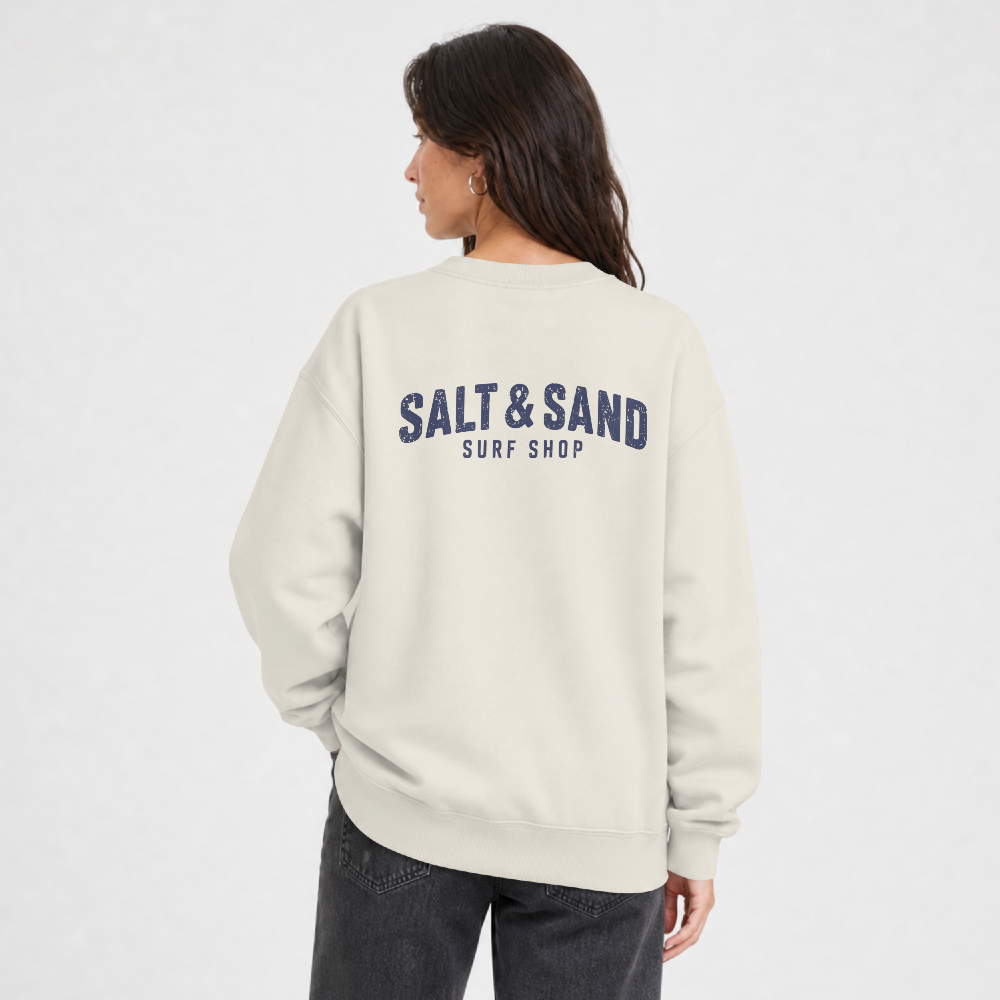
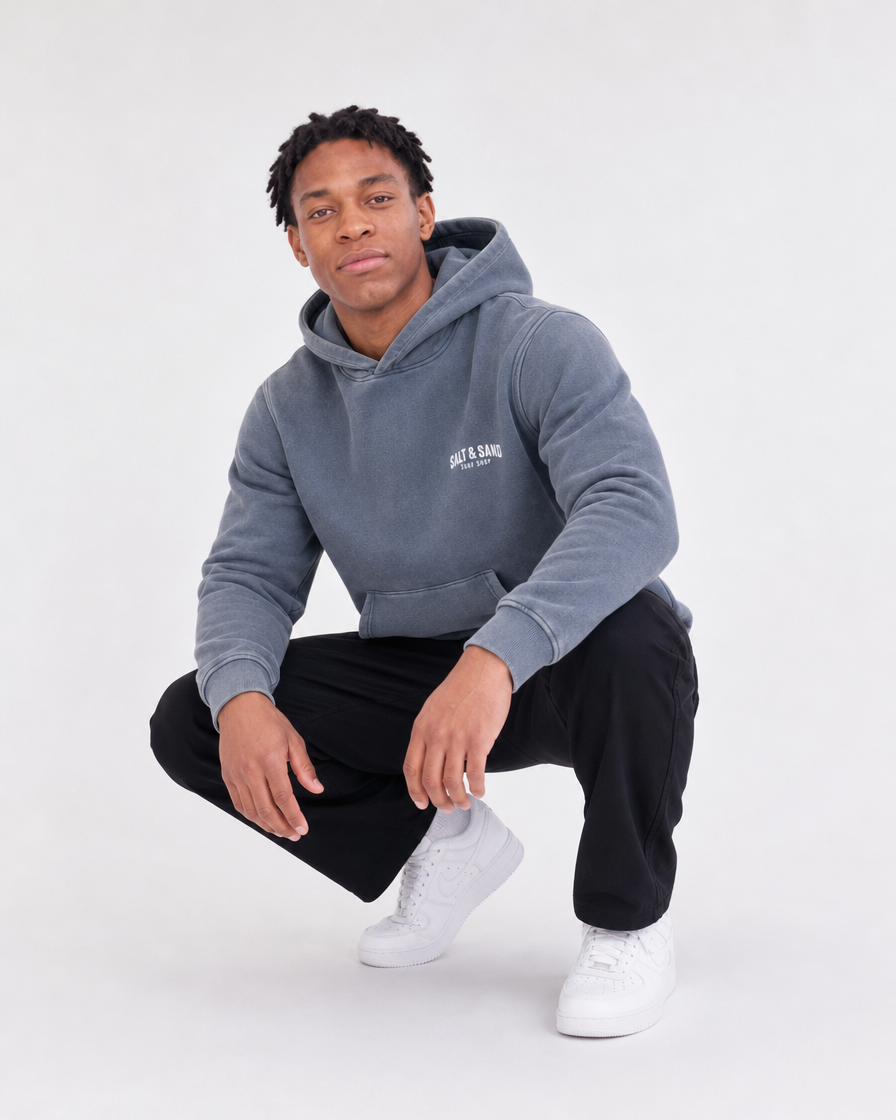
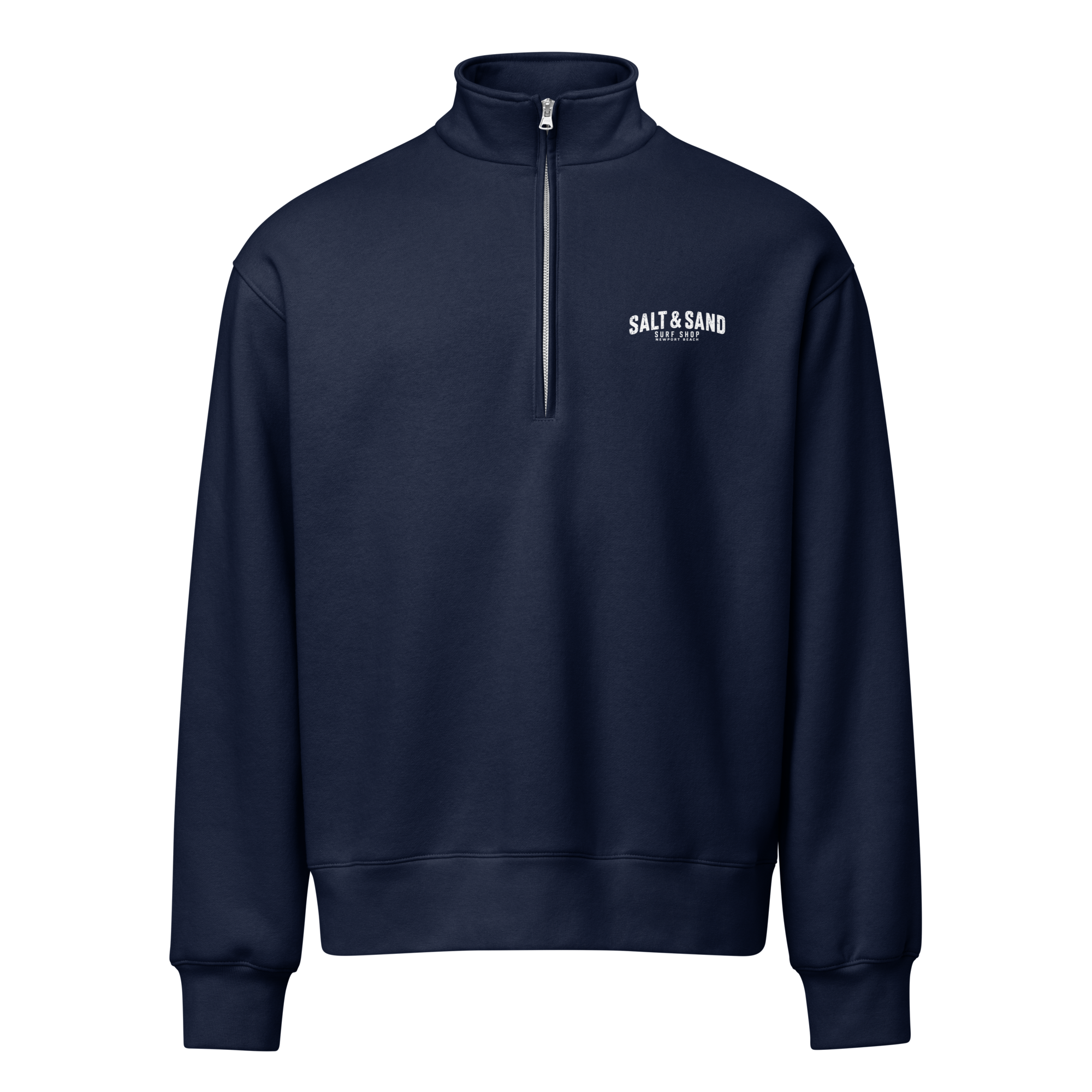
Price of Salt and Sand pieces
Sizing, Fit and Cost Per Wear
Sizing matters more for oversized pieces than for fitted ones. The Saltwater Fade Sweatshirt and Hoodie list measurements in both inches and centimeters across sizes S through 2XL, including length, chest, shoulder, and sleeve length. Compare these numbers against a garment you already own and like rather than relying on your usual size label.
Cost per wear is the better measure of value. A $69.95 sweatshirt worn 100 times costs about 70 cents per wear. A $24.95 tee worn 20 times costs about $1.25 per wear. Price alone does not tell you which is the better buy.
Caring for Your Pieces So They Last
Care decides how long a garment lasts. The Saltwater Fade pieces are listed for machine washing at 30°C on a gentle cycle, no bleach, low tumble dry, and ironing at low heat away from prints. Do not dry clean them.
Wash less often when you can, turn garments inside out, and air dry where possible.
Choosing Your First Eco Clothing Brand Piece
If you are new to eco clothing brands, start with one piece you will wear weekly. A quarter zip or a well-made tee is a low-risk entry point, and it lets you test fit, fabric, and care before committing to a heavier sweatshirt or hoodie.
Our pick for a first purchase is the Salt and Sand Quarter Zip, which costs $59.95. Once you know how the fit and fabric suit you, the Vintage Script Tee at $24.95 is an inexpensive way to add a coastal graphic to your rotation.
Frequently Asked Questions
Where can I buy sustainable clothing online?
Start with brands that publish specific details about their materials, construction and care instructions rather than only general sustainability language. Salt and Sand Surf Shop lists exact fabric blends, fabric weights and care steps for its pieces, such as the Saltwater Fade Sweatshirt at $69.95, which is made from 53% polyester, 42% cotton and 5% other fibers at 355 gsm. Check whether a brand names its fiber content, supports a cause with a clear commitment, and offers sizing charts in both inches and centimeters before you buy.
What should I look for in sustainable coastal clothing?
Look for a clear fabric composition, a fabric weight and a fit description. Salt and Sand's Beach Life Tee is 100% combed and ring-spun cotton at 4.2 oz/yd² and is pre-shrunk, which helps it keep its shape through washing.
Are there affordable sustainable clothing brands?
Yes. Salt and Sand's Beach Life Tee and Vintage Script Tee are both priced at $24.95, and the Salt and Sand Quarter Zip is $59.95. Affordability is best judged by cost per wear, not the sticker price alone. Part of every purchase at Salt and Sand supports the Surfrider Foundation.
Which clothing brands offer coastal-inspired styles?
Salt and Sand Surf Shop focuses on coastal-inspired apparel, including the Saltwater Fade Hoodie at $74.95, the Saltwater Fade Sweatshirt at $69.95 and the Beach Life Tee at $24.95. Compare each brand's listed materials, fit and care instructions side by side, since a relaxed look does not guarantee durable fabric. For a coastal wardrobe, prioritize pieces you can wear both at the beach and in everyday inland life.
