

How to Find Durable Surf Clothing That Lasts
Quick Summary
Finding durable surf clothing comes down to fiber choice, construction quality, and how the garment handles salt, sand, and UV exposure. Look for synthetics like polyester or nylon, which tolerate saltwater well, along with flatlock seams, reinforced stress points, and good dye quality.
- Polyester and nylon tolerate saltwater well, while untreated cotton absorbs moisture and loses shape.
- Flatlock or double-needle seams hold up better than single-needle stitching at shoulders and crotches.
- Check fabric weight in gsm; lightweight surf tops often fall in the 120-170 gsm range.
- Rinse garments in fresh water after every session to remove salt and sand before it works into the fibers.
- Compare cost per wear by dividing the purchase price by the number of times you expect to wear the piece.
Table of Contents
- What Makes Surf Clothing Durable in Saltwater and Sun
- Surf Clothing Fabrics Compared: Which Hold Up Best
- A Durability Inspection Checklist Before You Buy
- How to Find Durable Surf Clothing Online
- Matching Garments to Your Conditions and Use Frequency
- How to Care for Surf Clothing So It Lasts Longer
- Best Surf Clothing Brands and Where Salt and Sand Fits
- Frequently Asked Questions
What Makes Surf Clothing Durable in Saltwater and Sun
Last Updated: November 22, 2026
Finding durable surf clothing comes down to three things: fiber choice, construction quality, and how the garment handles salt, sand, and UV exposure. At Salt and Sand Surf Shop, we built our range around the idea that a piece you wear in the surf should still look right after a season of rinsing.
Saltwater leaves a residue of salt crystals in the weave, and those crystals abrade fibers every time the fabric flexes. Sand grinds into seams and lining the same way.
Durability usually depends on a handful of measurable factors:
- Fabric weight and density: Heavier, tighter knits resist abrasion better than lightweight, open weaves.
- Seam construction: Flatlock and reinforced stitching hold up better at stress points like shoulders and crotches.
- Dye quality: Colorfastness determines whether a garment keeps its look after repeated sun and salt exposure.
Don't judge durability by thickness alone. Learn more in our guide to durable surf apparel for active use. A thick cotton hoodie can pill and stretch out quickly, while a well-built synthetic blend may outlast it.
Surf Clothing Fabrics Compared: Which Hold Up Best
Fabric choice sets the baseline. Cotton is comfortable and breathable but holds water and dries slowly. Our best soft fabrics for beach wear comparison breaks down drying time and comfort side by side.
The practical question is how a fabric behaves after twenty or thirty sessions, not on the rack. Synthetics generally win on longevity in saltwater; natural fibers win on comfort for casual wear away from the water.
Natural and Recycled Fibers
Organic cotton and hemp appeal to buyers who want lower-impact materials and a soft, lived-in feel. Hemp resists wear better than many cottons but is less common in surf lines. Recycled polyester is a common choice for lower-impact production, so check construction details rather than the sustainability label alone.
UPF-Rated and Quick-Drying Performance Fabrics
UPF-rated fabrics are tested for ultraviolet protection, and a higher rating blocks more UV. Tightly woven synthetics typically offer better UV protection than loose cotton and dry much faster. Look for a stated UPF rating and check whether it applies when dry, since wet fabric can offer different protection (Sun Protective Clothing).
The table below sums up how the main fabric types compare for durability in saltwater.
| Fabric | Strength in saltwater | Key difference |
|---|---|---|
| Cotton | Holds water, loses shape | Comfortable but dries slowly |
| Polyester | Tolerates saltwater well | Dries quickly and keeps shape |
| Nylon | Tolerates saltwater well | Keeps shape in the water |
| Blends | Middle ground | Softer feel, slower drying |
| UPF-rated synthetics | Dry quickly, resist mildew | Tight weave gives better UV protection |
A Durability Inspection Checklist Before You Buy
Before you commit to a garment, spend two minutes inspecting it. Stores and websites rarely show the details that predict how a piece will age, so this checklist fills the gap:
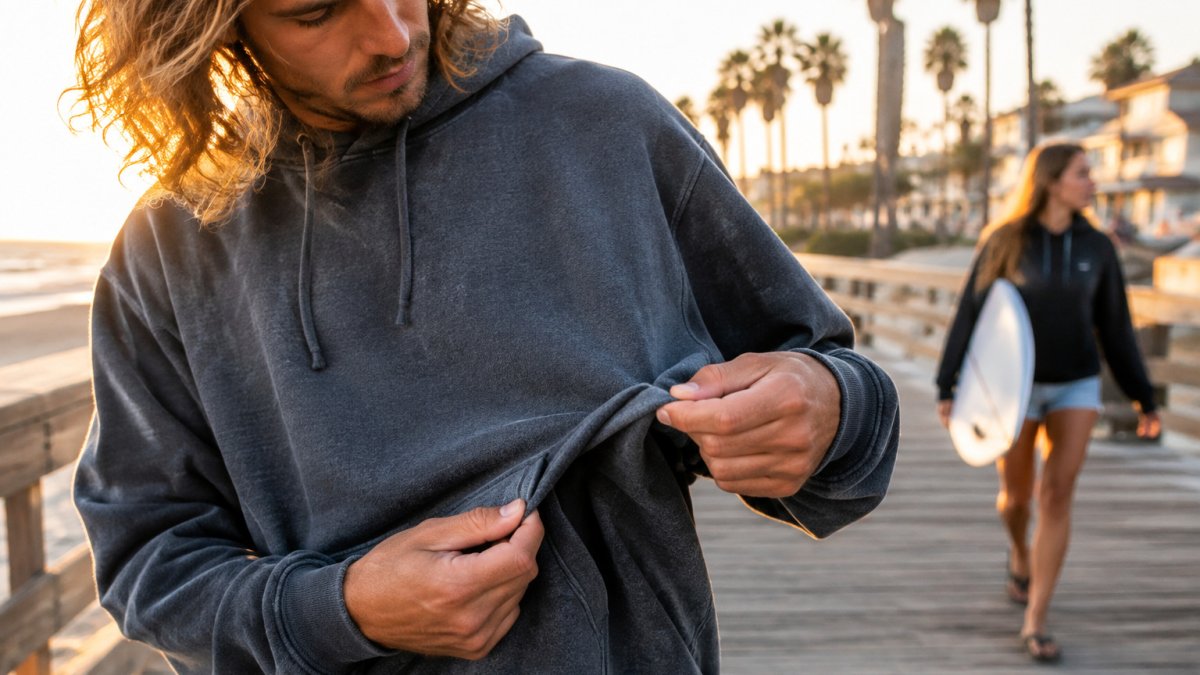
- Seams: Pull gently along side and shoulder seams. Flatlock or double-needle stitching resists pulling better than single-needle lines.
- Stress points: Check reinforcement at the crotch, waistband, and underarms.
- Fabric density: Hold the fabric up to light. Gaps between threads mean faster abrasion and pilling.
A quick test works well for dye: rub a damp white cloth on an inconspicuous area. Heavy color transfer suggests the dye may fade quickly in the water.
Softness and durability are not the same thing.
How to Find Durable Surf Clothing Online
Shopping online makes build quality harder to judge, but specifications still tell you a lot. Start with the material breakdown.
Look for reinforced stitching or flatlock seams, and read the care instructions. A garment that requires line drying in shade is telling you something about how its dye and elastic will behave; one that tolerates a cool tumble cycle is usually built with more forgiving fibers.
Reading Durability Claims Like a Buyer, Not a Marketer
Product pages increasingly cite test language, and it helps to know what the terms actually mean before you pay for them:
- Abrasion resistance: Usually reported as a Martindale or Taber result. Higher cycle counts mean more rubbing before visible wear. A published number gives you something to compare; "abrasion-resistant" alone does not.
- Colorfastness: Often a grey-scale rating from 1 to 5, where higher is better. Ratings of 4 or above suggest the dye will hold up to sun, salt, and washing with less fading.
- Pilling resistance: Also rated 1-5. A 4 or 5 means the fabric is less likely to form the small fiber balls that make a garment look worn.
Brands that publish specific test numbers tend to have more consistent construction, because the numbers invite comparison. Treat an unqualified "durable" claim as a starting point for your own inspection, not a conclusion.
Reviews, Photos, and Fit as Durability Signals
Customer photos and reviews are valuable when they describe performance after several weeks, not just on arrival.
Size charts matter too: a garment that fits well gets worn more, and frequent wear is one of the best predictors of value.
Our product pages list fabric composition, weight, and care instructions for each piece, so you can compare on specifications rather than appearance alone.
Matching Garments to Your Conditions and Use Frequency
The right garment depends on where and how often you use it. A surfer in cold water who paddles out several times a week needs something very different from a beachgoer wearing a shirt a few afternoons each summer.
Frequency changes the math. A garment worn daily in salt and sun needs to withstand far more cycles than one worn occasionally, so spending more on construction pays off faster for frequent users.
How to Care for Surf Clothing So It Lasts Longer
Care habits often matter more than the original purchase. Rinse garments in fresh water after every session to remove salt and sand, since residue left to dry works into the fibers.
Dry garments in shade rather than direct sun. Intense UV fades color and weakens elastic over time, and a high-heat tumble dryer does the same. Air drying preserves shape and extends the life of stretch fibers.
A Simple Rinse-and-Wash Routine
A repeatable routine beats occasional deep cleaning. After a session, rinse in cool fresh water within a few hours, paying attention to seams, waistbands, and underarms where salt collects.
Watch out: leaving a wet rash guard in a hot car or a sealed bag is one of the fastest ways to set mildew and weaken elastic, and the smell often does not come out.
Repair Before You Replace
Small failures are cheap to fix and expensive to ignore. Secure a pulled seam thread with a few hand stitches before it unravels, patch a small tear in a synthetic top with an adhesive or heat-applied repair patch made for technical fabrics, re-thread loose drawcords, and replace worn zipper pulls rather than the garment.
Check repair services before discarding a piece. Many outdoor and surf retailers offer seam and zipper repair, and local tailors handle hems and patches inexpensively. A repair usually costs a fraction of a replacement and keeps a garment you know fits well in rotation.
Warranties, Resale, and End-of-Life Options
Warranty coverage varies widely, so read the terms before you buy. Some brands cover manufacturing defects such as seam failure for a defined period, while normal wear-and-tear is typically excluded.
When a garment reaches the end of its useful life, resale and recycling beat the trash. Clean, gently worn surf tops and hoodies often sell through secondhand marketplaces, and some brands run take-back or recycling programs for worn-out textiles.
Cost per Wear: The Number That Actually Matters
Cost per wear is a transparent way to compare garments: divide the purchase price by the number of times you realistically expect to wear the piece. A $70 rash guard worn twice a week for two seasons, roughly 100 sessions, works out to about $0.70 per wear.
A few minutes of attention after each session, plus a repair now and then, can add seasons to a garment's life and lower its real cost.
Best Surf Clothing Brands and Where Salt and Sand Fits
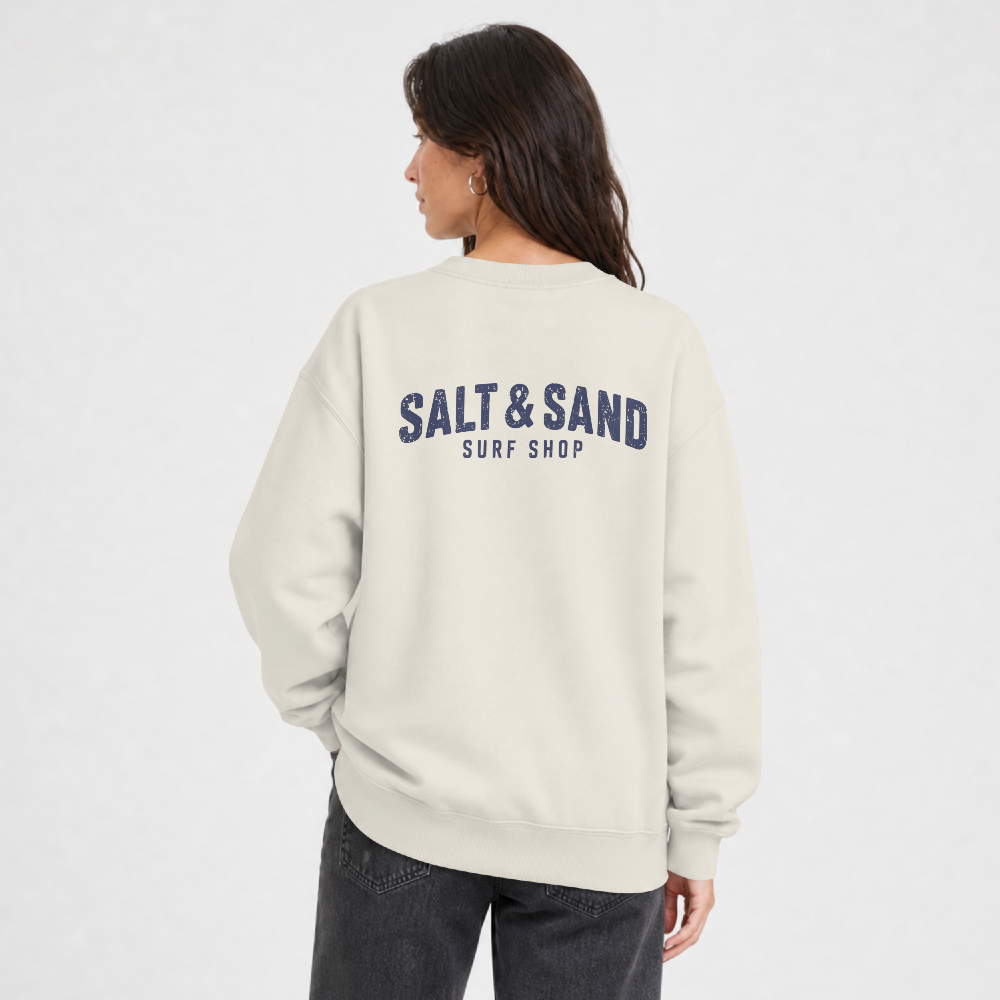
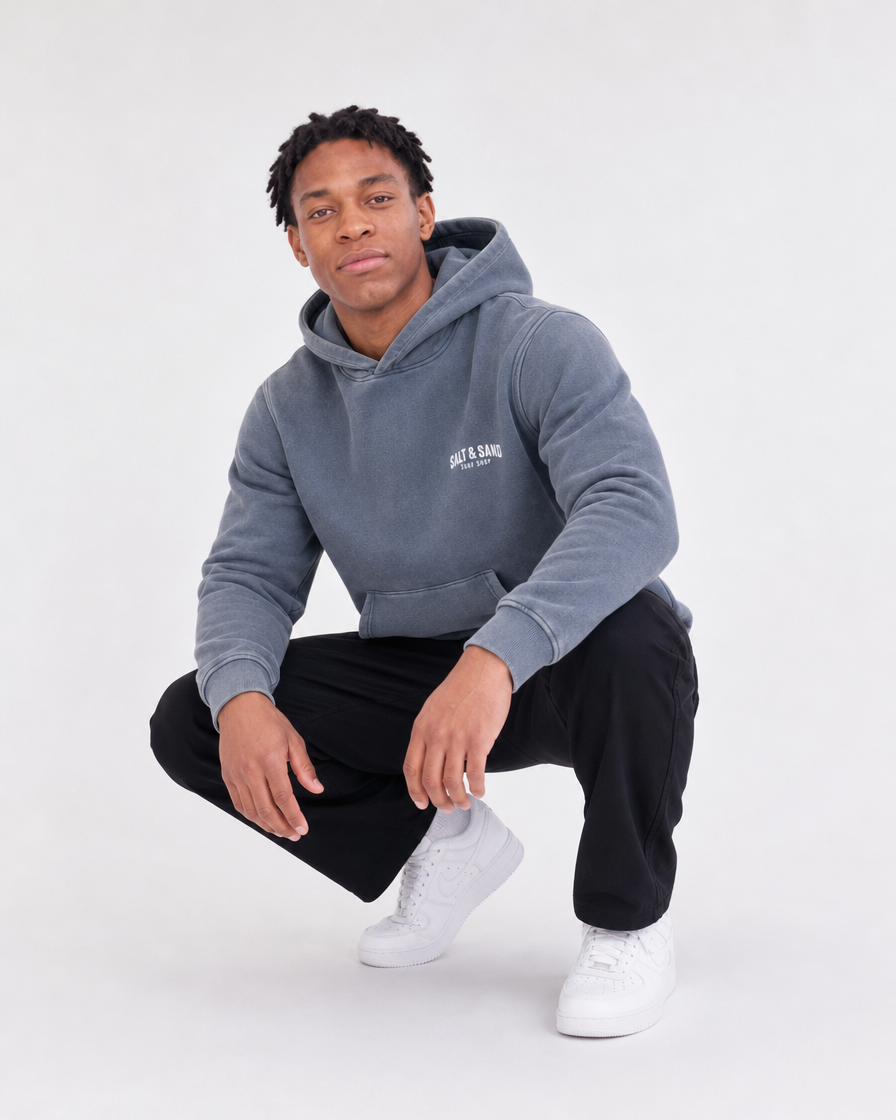
At Salt and Sand Surf Shop, our focus is on comfortable, coastal-inspired pieces that work both in the water and in everyday life. Our Saltwater Fade Sweatshirt ($69.95) and Saltwater Fade Hoodie ($74.95) use a blend of 53% polyester, 42% cotton, and 5% other fibers at 355 gsm, with a washed fade finish. Our Vintage Hoodie with Grey Script ($54.95) is built from a 52% airlume combed ring-spun cotton and 48% poly fleece blend at 6.5 oz, with side-seamed construction.
Frequently Asked Questions
What makes surf clothing durable?
Durable surf clothing combines a tightly woven or heavyweight fabric, reinforced stitching at stress points such as the shoulders, underarms and cuffs, and construction that resists abrasion from sand and rough contact with boards. Saltwater and UV exposure also matter, so look for fibers that keep their shape and color after repeated wash and sun cycles. Checking these details before buying tells you more than the marketing copy does.
Which fabrics hold up best in surf clothing?
Heavier cotton-poly blends and polyester-based fabrics tend to hold their structure through repeated saltwater and sun exposure, while natural cotton can stretch and fade faster when it is soaked and dried often. Recycled polyester is a common choice for lower-impact production, and it performs well for quick-drying layers. Fabric weight, measured in ounces per square yard or grams per square meter, is one of the most useful indicators of how a piece will age.
How can you tell if surf clothing is well made?
Start with the seams: flatlock or reinforced stitching at high-tension areas usually signals better construction than thin single-needle seams that pucker. Check the hem and cuffs for clean, even finishing, and look at the fabric weight listed on the product page. Pilling, thin spots and loose threads after a single wash are warning signs. Good retailers list fabric content, weight and care instructions so you can compare pieces directly.
How do you make surf clothes last longer?
Rinse garments in fresh water after every session to remove salt and sand, which are the main causes of abrasion and fiber breakdown. Wash on a gentle cycle in cool water, avoid bleach, and dry flat or on low heat. Hanging wet rash guards and board shorts in shade prevents UV fading. Repairing small seam or hem problems early keeps a garment in use longer than replacing it.
What should you look for when buying surf clothing online?
Look for a full fabric breakdown, fabric weight, UPF rating where sun protection matters, and detailed size charts with measurements in both inches and centimeters. Read product descriptions for construction details such as side seams, reinforced stitching and drop-shoulder fit. Care instructions are a good indicator of how the fabric will behave over time. Reviews that mention fit, color retention and durability after several washes are especially useful.
Are recycled polyester clothes durable?
Recycled polyester can be as durable as virgin polyester when the yarn and knit or weave are comparable, and it resists stretching and shrinking in saltwater. Durability depends more on fabric weight and construction than on whether the fiber is recycled. Check the product listing for fabric weight and seam details, since a lightweight recycled fabric with thin stitching will wear out faster than a heavier, well-built piece.
Does Salt and Sand Surf Shop offer durable surf clothing?
The Saltwater Fade Sweatshirt is listed at $69.95 with a 355 gsm (10.5 oz) fabric weight, a blend of 53% polyester, 42% cotton and 5% other fibers, and a machine-wash, gentle-cycle care instruction. The Saltwater Fade Hoodie is listed at $74.95 with the same fabric weight and is rated for extra-thick construction. The Vintage Hoodie with Grey Script is listed at $54.95 and uses side-seamed, 6.5 oz heavyweight fabric. Compare fabric weight and care needs against the checklist in this guide to decide which fits your use.
Hoodie and sweatshirt prices at Salt and Sand
